
Every firm-skin promise on every jar traces back to two proteins. Collagen holds the skin up. Elastin snaps it back into place. Between them, they decide how skin looks, moves and ages, and they respond very differently to time, sun and treatment. Knowing how they work is the cheapest skincare decision you will ever make.
Key Takeaways
- Collagen is the scaffolding that keeps skin firm, and your body keeps making it, more slowly every year.
- Elastin gives skin its snap-back, and adults barely make any new supply, which makes protecting it the whole game.
- Creams sit on the surface. Rebuilding happens deeper, through habits and treatments that reach the cells doing the work.
Pinch the back of your hand and let go. The speed at which that skin settles flat again is two proteins reporting for duty, and the report gets slower every decade. Nothing on a beauty shelf escapes these two. Every firming claim, every plumping promise, every anti-ageing anything is, underneath, a claim about collagen or elastin.
Which makes them worth ten minutes of your attention. Plenty of people comparing options for skin treatment in London are weighing approaches that all claim the same outcome, and the way to judge those claims is knowing what the proteins underneath actually respond to.
So, let’s properly introduce the two. What each does, what destroys them, and where the honest levers are.
Two Proteins, Two Different Jobs
Collagen and elastin get spoken of as a pair, which hides how different their jobs are. Collagen is structure. It is the most plentiful protein in your body, woven through the deeper skin in dense fibres, and it is what makes young skin feel firm and padded.
Elastin is the recoil. A stretchier, much rarer protein threaded through the same layers, it is why skin springs back after a smile instead of staying folded.
Firmness and bounce. Related, easily confused, and lost in different ways.
Collagen: The Scaffolding
Skin cells called fibroblasts constantly build collagen, laying it down as a mesh that gives skin its thickness and strength. Through your twenties, the mesh gets maintained well. After that, production eases off year on year while breakdown carries on regardless.
The result arrives quietly. Skin gets a little thinner, a little less padded, and lines settle in more easily because there is less structure underneath pushing back.
The short version:
- Made continuously by fibroblasts, more slowly with age
- Gives skin its thickness, firmness and strength
- Its slow decline is behind much of what reads as ageing
Elastin: The Snap-Back
Elastin behaves differently, and less conveniently. Most of your lifetime supply is made early, in childhood and adolescence, and adult skin produces very little that is new. What you have is close to what you get.
That is why sagging and slow snap-back are so stubborn, and why any product claiming to rebuild elastin deserves a sceptical read. The realistic strategy with elastin is defence. Protect the stock, because replacing it is not really on the menu.
The short version:
- Provides recoil, the spring that resists sagging
- Mostly made early in life and barely renewed in adulthood
- Protection beats repair, because repair is limited
What Wears Them Down
Both proteins share the same enemies, and one towers over the rest. Ultraviolet light does not just age the skin’s surface. It activates enzymes that actively dismantle collagen and damages elastin fibres directly, which is why sun-exposed skin ages years ahead of skin that lives under clothes.
Smoking runs second, starving the skin of what fibroblasts need to do their work. A consistently sugary diet also plays a part by stiffening collagen fibres over time, though the sun still causes most of the damage most people see.
The main culprits:
- UV light actively breaks collagen down and damages elastin
- Smoking chokes off the supply lines fibroblasts depend on
- High-sugar diets can stiffen collagen over the years
- Ordinary ageing does the rest, slowly and to everyone
The Honest Bit About Creams and Pills
Here is the part the packaging skips. Collagen is a big molecule, far too big to soak through skin from a cream. A collagen moisturiser can hydrate and soften the surface nicely, but the collagen in the jar doesn’t join the collagen in your skin.
What topicals genuinely can do is create good conditions. Sunscreen protects the proteins you have. Well-chosen actives, used sensibly, support the skin’s own production. Collagen drinks and supplements sit in a greyer area, with research still developing and quality varying between products, so treat them as a possible extra rather than a foundation.
The pattern to hold onto: you cannot post collagen into skin from the outside. You can only protect what is there, or persuade the skin to make more.
Treatments That Talk to Your Fibroblasts
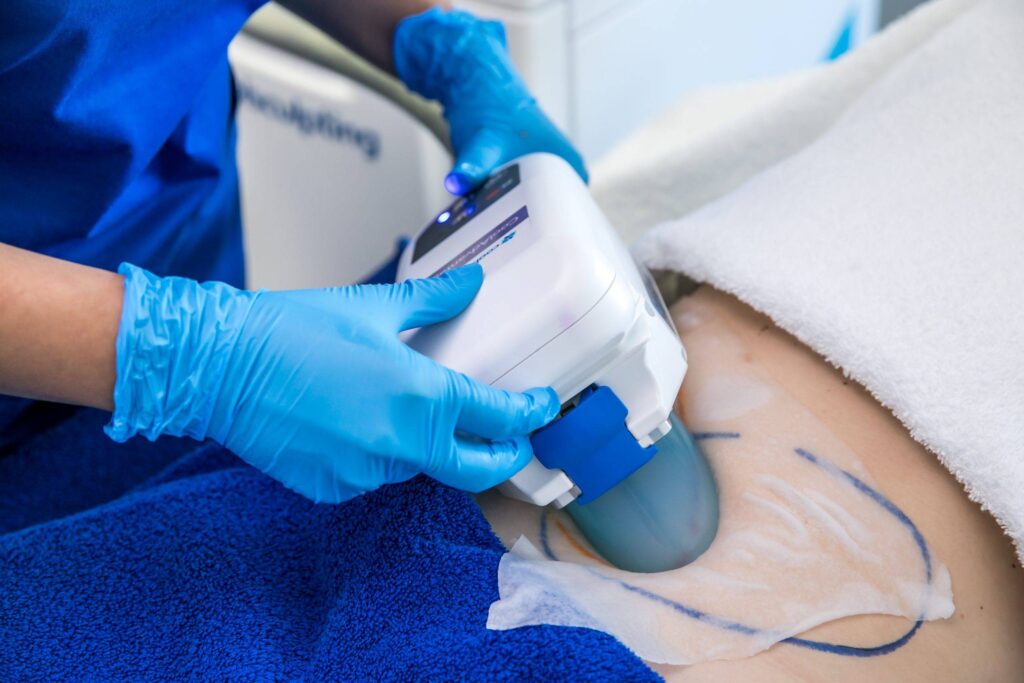
Persuasion is exactly how clinic treatments work. Microneedling, laser resurfacing, radiofrequency and focused ultrasound all deliver a controlled nudge, a small deliberate stress that prompts fibroblasts to respond by building fresh collagen over the weeks that follow.
Injectable collagen stimulators take a different route to the same destination, placing materials in the skin that trigger production around them. Results from all of these build gradually, which is the giveaway that real biology is doing the work rather than an instant surface effect.
The persuasion toolkit:
- Needling and resurfacing prompt repair through controlled micro-injury
- Radiofrequency and ultrasound warm the deeper layers to trigger building
- Injectable stimulators prompt collagen around placed material
- All of them work over weeks, because growing takes time
Protecting the Stock You Have
Whatever else you do, defence pays best, and it is cheap. Daily sunscreen protects both proteins at once, and it is the closest thing skincare has to a sure bet. Not smoking is the other one.
Beyond those two, a sensible routine and decent sleep help fibroblasts do their job, and not treating your face like a scouring project helps more than people expect.
The habits:
- Daily SPF, every season, is the single biggest lever
- Not smoking protects the supply to your skin
- Gentle, consistent care beats aggressive bursts
Firm Skin Is a Long Game
None of this rewards impatience, which is exactly why understanding it saves money. Anything promising overnight collagen is describing an effect, not the protein.
If you want a plan built on real biology, a doctor-led clinic such as Nakedhealth Medispa can assess your skin, explain which treatments genuinely stimulate collagen and which goals need a different approach, and sequence it sensibly. Start with an assessment. The proteins will take it from there.